Erwin 20th
ASPECT Studios is a place that can support a career from its earliest point through to its more specialised stages. This is exemplified by the experiences of Erwin Taal, Senior Associate at ASPECT Studios in Melbourne, who joined the practice 20 years ago.
In an interview marking this milestone, Erwin reflects on two decades of growth, collaboration, and change. He discusses the evolution of the landscape architecture profession, the shift from sustainability to regenerative design, and the projects and people that have shaped his journey along the way
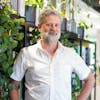
You’ve been with ASPECT Studios for 20 years now. Can you start by talking about what first brought you into landscape architecture?
Erwin: I started off in architecture at the University of Melbourne, doing the Bachelor of Planning and Design. During these studies I stumbled across a group of people in another part of the building, landscape architects, and thought, this aligns with a lot of things I’m interested in.
What I really enjoyed through that time was the idea of place creation and sustainability. I had a professor who was quite cutting-edge in sustainability then, and I realised how relevant that thinking was to landscape architecture. It wasn’t an add-on, it was fundamental.
After graduating around 2002, I joined a small firm called Context Conybeare Morrison, a Melbourne offshoot of two Sydney practices.
As Context wound down its Melbourne operations, I was talking with Warwick Savvas, who I’d known since uni, and he mentioned ASPECT Studios was hiring. Back then, the Melbourne studio was on Easey Street in Collingwood and only had around 8 to 10 people. Sydney had been running for a couple of years, and China started not long after. I even did a short stint in our Shenzhen office when it was based there.

How has the industry evolved over the 20 years you’ve been with ASPECT?
I think landscape architects have proven that we can lead projects, not just come in at the end. ASPECT has gained the confidence to be in that driver’s seat, particularly over the last decade.
There’s also much more respect now across disciplines. We’re no longer seen as the poor cousins of architects. The boundaries have blurred between architects, landscape architects, and urban designers, and that’s made collaboration stronger and richer.
Sustainability has become much more sophisticated too. It’s no longer the green dressing in front of buildings; it’s central to how projects are conceived. We’re seeing sustainability and regenerative design drive project outcomes rather than being add-ons.
And there’s a broader understanding now, within the profession and beyond, of the impacts of climate change and the need to move from sustainability toward regeneration. The idea isn’t just to do less harm but to leave things better than we found them.


How do you define the difference between sustainability and regenerative design?
It’s a bit of both, evolution and shift. Early on, sustainability focused on materials and resource efficiency, asking what’s the most sustainable material, how to orient a building passively, and how to reduce impact.
Regenerative design now takes a more systemic view. It looks at the relationships between elements, the ecological, social, and cultural systems a project operates within, and how design can give back to those systems, not just take less from them.
What projects at ASPECT have embodied that approach?
Some of our public transport and urban projects really helped shape that direction, introducing green roofs, green walls, podium planting, and ways to bring ecological systems into dense urban environments.
Those early Victoria Harbour projects, for instance, included green roofs that demonstrated how buildings could contribute positively to the urban ecology. We worked with great collaborators, firms like Junglefy and Fytogreen, to understand what was needed to make those systems thrive.
Often, those projects were more challenging than broad open spaces because you’re working within tight constraints, budgets, and structures. But they proved that regenerative outcomes are possible anywhere when the intent and collaboration are there.

What advice would you give to young designers who want to work in regenerative design?
Always be curious. Ask why things are done a certain way and how they can be done better. Push boundaries, read widely, and learn from allied professions.
There’s so much research happening in universities and industry. Figuring out how to apply that knowledge in real projects is key. It’s about bridging research and practice, translating big ideas into real, buildable outcomes.
What are you proudest of in your time at ASPECT?
Revisiting projects and seeing people use them in ways we hadn’t anticipated.
A favourite example is 717 Bourke Street. It unexpectedly became a hotspot for skateboarders. To the client’s dismay, maybe, but it was fascinating to see people claim the space in their own way. It showed that we’d created a genuine piece of urban fabric.
And working with a great array of talented designers and thinkers, learning from but hopefully also teaching them!

And what’s your ambition for the next five years?
There’s a lot of good intention in the regenerative design space right now, policy, industry, talk, but not always enough action. ASPECT is in a position to push for more experimental, regenerative work that genuinely gives back, ecologically, socially, materially.
That means projects that are net positive for nature and community, restoring habitat, improving water systems, and creating places people love.
Personally, I’m also passionate about mentoring younger designers. They’re far more aware of climate and sustainability issues, and it’s inspiring to see how motivated they are to make change. Helping guide that next generation is something I really look forward to.


