Geelong Laneways: Dennys Place/Malop Arcade
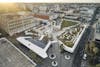
This laneway regeneration is part of a long-term partnership between the Victorian State Government and the City of Greater Geelong to revitalise the city centre. The project is the first of two ‘laneway breakthrough’ projects conceptualised by ASPECT Studios collaborating with NWBW architects.
Each site was identified as a priority project within the previous Central Geelong Laneways strategic study, and uniquely, each involves the removal of an existing building to 'breakthrough' and connect the laneways as mid-block crossings within the central city.
Read more +
- TRADITIONAL OWNERS & ONGOING CUSTODIANS OF THE LAND Wadawurrung
- YEAR 2019 - 2023
- CLIENT Revitalising Central Geelong Partnership (Dept. of Environment, Land, Water & Planning, City of Greater Geelong)


Beyond simply improving through-site pedestrian access, our team identified the opportunity for the two laneways to become generous public realm spaces within the city centre, providing valuable amenity for residents, workers, and visitors to the city.
ASPECT Studios and NMBW advocated for the retention and adaptive reuse of the historic building’s facades, street awnings, and roof structures, of each location, to honour and celebrate the sites past histories and minimise the unnecessary use of new materials.
Read more +


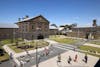
At Dennys Place, the historic bluestone facades and hardwood timber roof structures of the building have been repurposed to form a unique ‘arcade-like’ laneway, with sheltered spaces to sit, gather, and socialise. Other existing materials availed through the building’s partial demolition and suitable for repurposing were identified, including brick, timber, and stone. They form new planters and seating walls, and timber benches.


-
TEAM
NMBW Architecture Studio (Architect)
AKT (Project Manager)
FMG (Structural Engineer)
WSP (Civil, Services and Lighting) - AWARDS 2025 AIA Victoria Awards; Small Project Architecture
- PHOTOGRAPHY Peter Bennetts

Beyond the building, the laneway has been regenerated through a series of small interventions, with a focus on integrated water management. A centrally located, recycled brick channel now reduces previous issues of flooding to adjacent properties. Small brick planters and strips more clearly demarcate zones for bin storage and waste collection. Where space has allowed, cylindrical bioretention planters have been introduced to divert rainwater from building downpipes passively irrigating vines and sedges. These living architectural elements bring joy and uplift what is primarily a service laneway, whilst further mitigating flood risk.


The Market Street project, the second of the ‘laneway breakthroughs’, is currently under construction and will be completed in late 2025.